PARISMAT 2026 CONFERENCE:
WHEN DATA TAKES THE WATCH

Review of the ParisMAT 2026 conference and the panel discussion on innovation serving maritime insurance

Some events return with the regularity of the tides. Every early summer, the Committee for Studies and Services of Marine and Transport Insurers (CESAM) gathers the entire industry in Paris for ParisMAT, the annual international conference of the transport insurance market.

Insurers, reinsurers, brokers, experts, lawyers, shipowners: hundreds of professionals gather there, traditionally in the opulent setting of the Maison de la Chimie, to take the pulse of a sector as old as trade itself.

Over the years, ParisMAT has echoed the major trends impacting the profession: maritime safety and containers lost at sea, fleet decarbonization, the rise of cyber risk, and the geopolitical reconfiguration of trade routes.

The 2026 edition upheld this watchtower role by dedicating one of its panel discussions to a question that, until recently, seemed to belong to foresight: how can innovation serve maritime insurance?

A multi-voice panel discussion

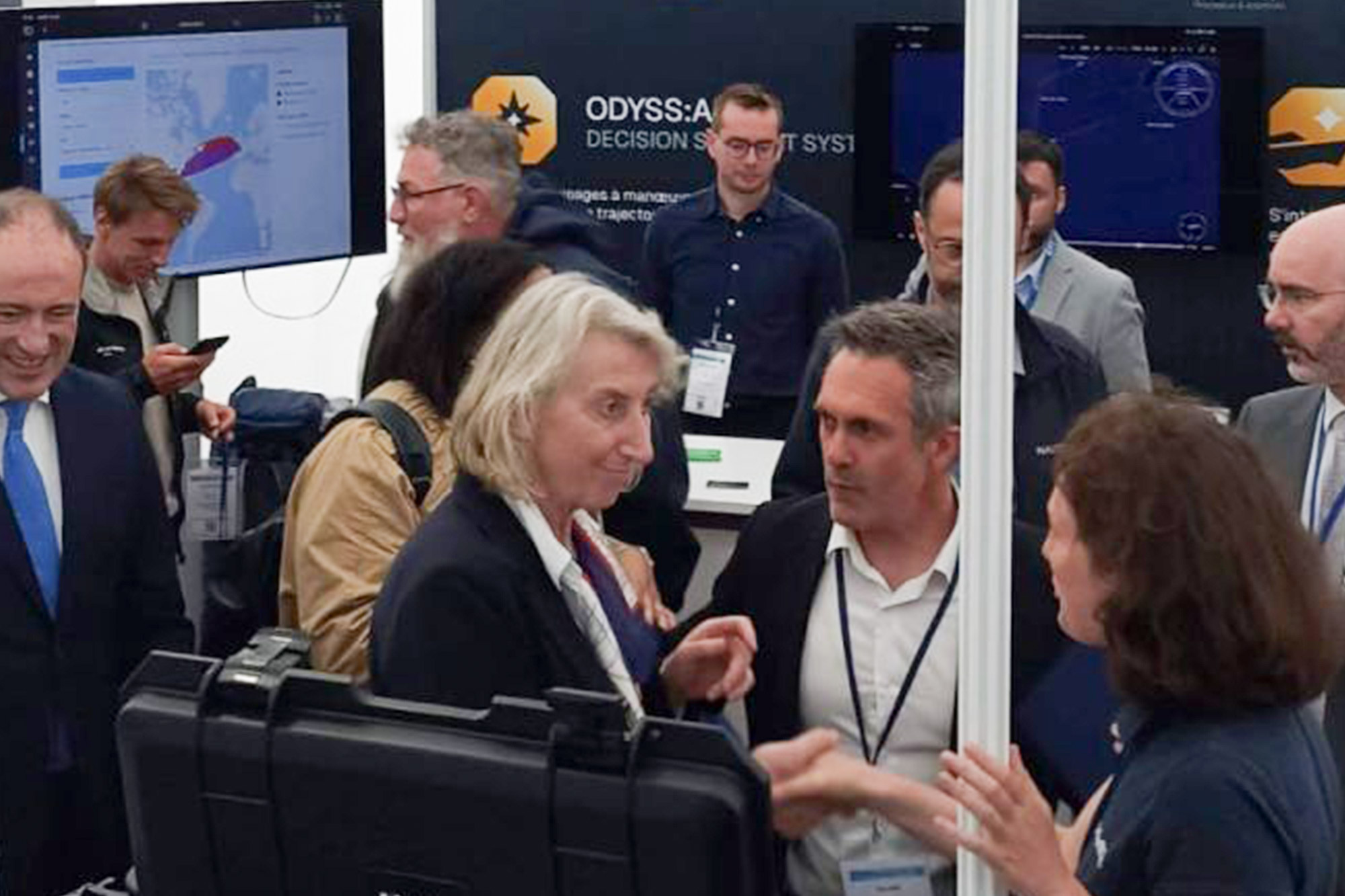
It was at CESAM’s invitation that ECOMER Data took its place at this table. Aurélie Cordelle represented the company alongside Alexis Cordero, Claire Paulus, Guillaume Laurent, and Sophie Caillaud, in an exchange where each brought their perspective: that of the insurer, the expert, the innovator. From this cross-pollination of views emerged a shared conviction, which the audience seemed to embrace: data is no longer just a supplementary tool; it is becoming one of the profession’s navigation instruments.

Reading the ship like reading the sea

For a long time, maritime insurers worked by estimation, much like navigators of old: relying on experience, claims history, a shipowner’s reputation, and the seasoned judgment of underwriters. These benchmarks remain valuable.

But today’s ships have become true floating sources of information, and the data they produce tells, for those who know how to read it, a more nuanced and earlier story than any expert report written after the fact. Aurélie Cordelle highlighted this interpretation during her presentation. She focused on two subjects that significantly impact insurers’ ratios: machinery breakdown and DTH (Damage to Hull).

In these areas, leveraging ship data changes the game on several levels. First, it allows for a better understanding of claims, by reconstructing what actually happened on board rather than merely supposing it. Second, it paves the way for anticipating failures, by identifying weak signals before they become casualties. Finally, it informs underwriting, by offering a more accurate vision of each vessel’s real risk, and enables more precise support for insured partners in shared prevention rather than merely being beneficiaries of compensation.

In short, it’s no longer just about repairing after the storm, but learning to see it coming

A SHARED COURSE AHEAD

Beyond the individual presentations, it was the discussions that gave this panel its true value. The quality of the questions, the diversity of viewpoints, and the frankness of the debates confirmed what many had sensed: innovation and data have become essential levers for evolving maritime insurance, not by breaking with its heritage, but by extending it.

ECOMER Data sincerely thanks CESAM for its invitation and the quality of the organization, all speakers and participants for the richness of shared perspectives, and Ilia Maslov for the photograph that captures this moment.

Our OTHER news